
Lok Sabha takes up FCRA Amendment Bill amid opposition protests.

The Tamil Nadu Assembly has adopted crucial resolutions against the National Eligibility cum Entrance Test (NEET) and the Foreign Contribution (Regulation) Amendment Bill, 2026, with the lone BJP member opposing both.

A US Congressman has raised serious concerns regarding India's proposed amendments to the Foreign Contribution Regulation Act (FCRA), warning that these changes could lead to government takeovers of religious charities and strain bilateral relations.

Lok Sabha Speaker Om Birla has made a rare move by nominating two Rajya Sabha members as "special invitees" to the Joint Parliamentary Committee (JPC) examining the Foreign Contribution (Regulation) Amendment Bill, 2026. This decision comes as the contentious Bill, referred to the 31-member JPC for detailed examination, faces opposition demands for its withdrawal.

The Congress party has directed its MPs to attend Parliament and protest against the FCRA Amendment Bill, describing it as unconstitutional and a threat to minority organisations. The government asserts the bill aims to enhance transparency and prevent misuse of foreign funds.

Minister of State for Home Nityanand Rai said the legislation was not against any NGO and is an effort to maintain transparency. This amendment is in the interest of good NGOs which want to do good work in the country.

Congress president Mallikarjun Kharge has said that the Congress will oppose the Foreign Contribution (Regulation) Amendment Bill and the issue will also be discussed at the meeting of floor leaders of opposition parties on Monday.

India's Ambassador to the US, Vinay Mohan Kwatra, has clarified that the recent amendments to the Foreign Contribution (Regulation) Act (FCRA) are primarily aimed at enhancing transparency and ensuring accountability in foreign financial flows.

The Lok Sabha has referred the contentious Foreign Contribution (Regulation) Amendment Bill, 2026, to a 31-member joint parliamentary committee for thorough scrutiny.

Major bills, including those on women's reservation, delimitation, and the Foreign Contribution (Regulation) Act (FCRA), face an uncertain future in the ongoing Monsoon session of Parliament due to persistent opposition protests and a lack of consensus.

The Congress party has issued a whip to its MPs in both the Rajya Sabha and Lok Sabha, mandating their presence from August 10-12 for discussions on "very important" issues. This directive comes amidst reports of potential debates on the Foreign Contribution (Regulation) Amendment Bill, 2026, and a Constitution Amendment Bill concerning delimitation, though the government's official business list did not explicitly mention these.

The government is considering sending 'The Foreign Contribution (Regulation) Amendment Bill, 2026' to a joint committee of both houses of Parliament for further examination, even as the Congress and some other opposition parties have demanded that it be withdrawn, sources said on Tuesday.

Mizoram Chief Minister Lalduhoma met Union Home Minister Amit Shah regarding the Foreign Contribution (Regulation) Amendment Bill, 2026. Shah assured that the bill would not be retrospective. Various church and minority organisations have expressed concerns about the bill's impact on NGOs, schools, and healthcare units, urging its withdrawal or referral to a joint parliamentary committee.

The Ministry of Home Affairs informed a Joint Committee of Parliament that the number of active NGOs registered under the Foreign Contribution (Regulation) Act has halved over the last decade, even as foreign funds received by them have significantly increased. Christian associations received the largest share of these funds in 2024-25. The report comes amidst discussions on a contentious FCRA amendment bill aimed at tighter government oversight.
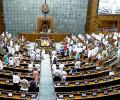
The Congress party is set to challenge the Modi government on a range of critical issues, including alleged theft of Ram temple donations, 'systemic corrosion' of the education system, and constitutional amendment bills related to delimitation and dismissal of ministers, during the upcoming Monsoon Session of Parliament.

A delegation of NCP (SP) Lok Sabha MPs, led by Supriya Sule, met Prime Minister Narendra Modi to discuss various issues concerning Maharashtra, including drought, onion prices, and river pollution. The meeting, which lasted about 15 minutes, did not include discussions on the FCRA Amendments Bill, which Sule opposes. This follows a previous meeting between Sharad Pawar, Sule, and the PM regarding student and farmer issues.

The Indian government and opposition are preparing for a contentious Monsoon Session of Parliament, with key issues including the Constitution Amendment Bill on delimitation and women's reservation, the alleged NEET paper leak, and a row over Ram temple donations set to spark heated debates.
More than half of the bills introduced in the 18th Lok Sabha have been passed by both Houses in the same session, a significant acceleration compared to previous terms, raising concerns about the time available for legislative scrutiny and stakeholder consultations.

Senior Congress leader Ramesh Chennithala has accused the BJP of attempting to intimidate bishops and church leaders in Kerala to gain their support, asserting that such tactics will not succeed in the state.

Parliamentary Affairs Minister Kiren Rijiju met Leader of Opposition Rahul Gandhi to discuss resolving the persistent deadlock in the Lok Sabha's monsoon session, focusing on the Delimitation Bill and FCRA Bill, though no immediate commitment was secured from the Congress leader.

Congress leader Rahul Gandhi intensified the UDF's campaign for the Kerala polls, accusing the CPI(M) of stealing gold from the Sabarimala temple and questioning PM Modi's silence on the issue. He also addressed concerns about rubber prices and the FCRA amendments.

Giving a reform boost to the commodity futures market, the government on Thursday cleared a Bill that seeks to provide more power including financial autonomy to regulator FMC and introduce new categories of products.

'Our leaders, including Mallikarjun Kharge and Rahul Gandhi, are in touch with all Opposition parties, including the DMK and the AAP.'

Larger NGOs could no longer work with smaller ones, especially those organisations working on the ground that had no means of or expertise in raising money themselves, reveals Aakar Patel.

Home Minister Amit Shah has offered to hold a comprehensive debate in Parliament on student protests and other pressing issues, but Congress leader Rahul Gandhi has swiftly rejected the proposal, demanding accountability for actions against students.

The retrospective amendment will help BJP and Congress escape the fallout of a 2014 Delhi high court judgment that held both guilty of violating the FCRA.

The registration was cancelled as Infosys Foundation allegedly did not file income and expenditure statement on foreign funding for the past few years, officials said.
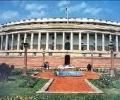
To the disappointment of the Forward Markets Commission, the commodity markets regulator, the standing committee of Parliament examining the Bill seeking to amend the Forward Contracts (Regulation) Act, 1952, has invited suggestions from the public and stakeholders, including consumer bodies.

'It is especially discouraging for young people in the development sector. I've noticed that many of them are actively considering other career options to escape this atmosphere.' Geetanjali Krishna reports.

Any NGO critical of the government is unlikely to receive a green signal. The new amendment will leave NGOs vulnerable to harassment. It was the NGO sector that helped provide compassion and food to millions of people during the lockdown. The new Bill will render such cooperation and camaraderie impossible in future, observes Rashme Sehgal.

'Amendments in the past have created fear. This will take it further.'

Will get powers to levy fines and penalties and allow options trading in commodities.

DEA officials to push for this at a meeting with FM Jaitley.
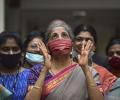
'Prime Minister Modi stated several times that we shall not let this challenge go away without converting it into an opportunity to undertake systemic reforms.' 'And hasn't that been reiterated in action?'

Grover had said a summons was issued by the special court in Ghaziabad against Ayyub for January 27 and therefore the matter be listed urgently.
The Supreme Court on Tuesday agreed to hear the petition of journalist Rana Ayyub challenging the summons issued to her by a special Prevention of Money Laundering Act (PMLA) court in Ghaziabad in a money laundering case lodged against her by the Enforcement Directorate (ED).

Officials also said that the move to send out the emails was a conscious choice as part of a communication strategy for public interest.
The Supreme Court on Wednesday asked a special court in Ghaziabad, which has summoned journalist Rana Ayyub in a money laundering case lodged by the Enforcement Directorate (ED), to adjourn the proceedings scheduled for January 27 to a date after January 31.

'The government is using the Intelligence Bureau to go after NGOs.' 'It is not only the NDA, the UPA also didn't like NGOs.' 'NGOs predominantly work with the poor. So, when you cancel an NGO, the affected are the poor, the Dalits, the tribals, the street children and the marginalised.'
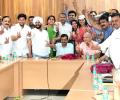
'Even if something appears to be wrong, we can always request the government and Parliament to make amends.'
